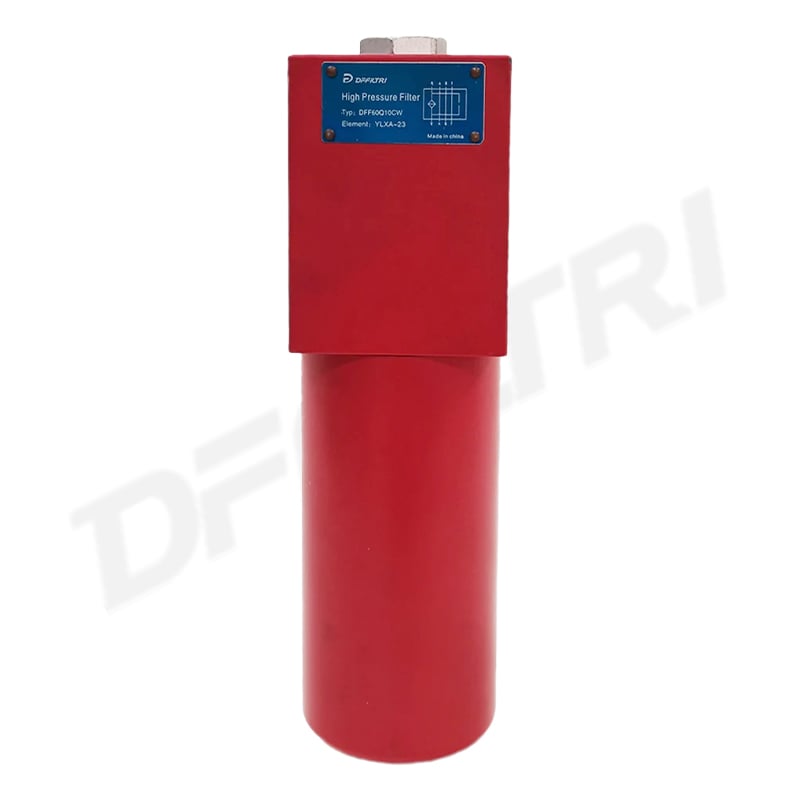
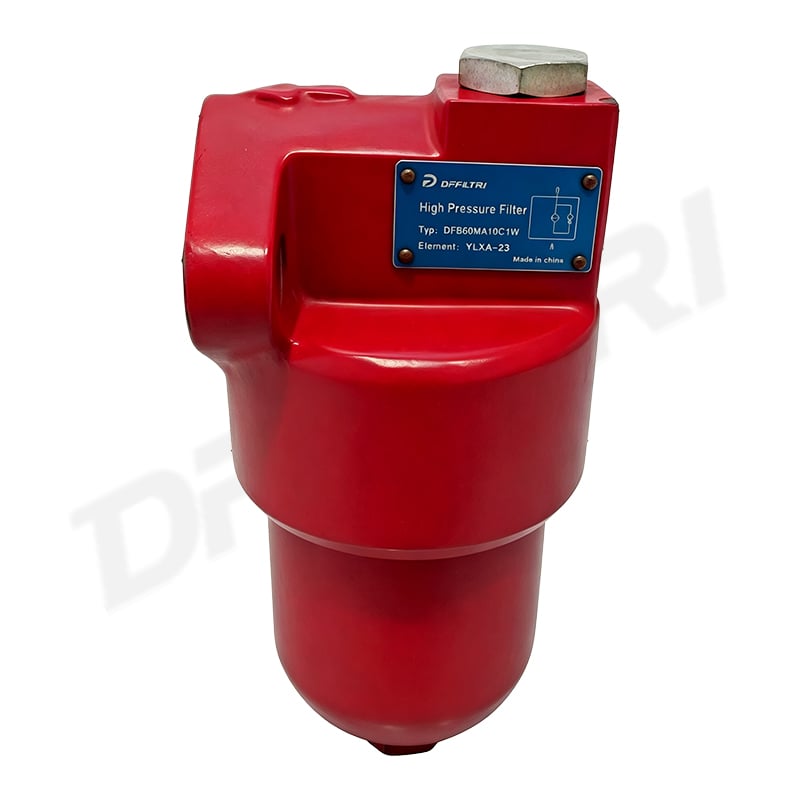
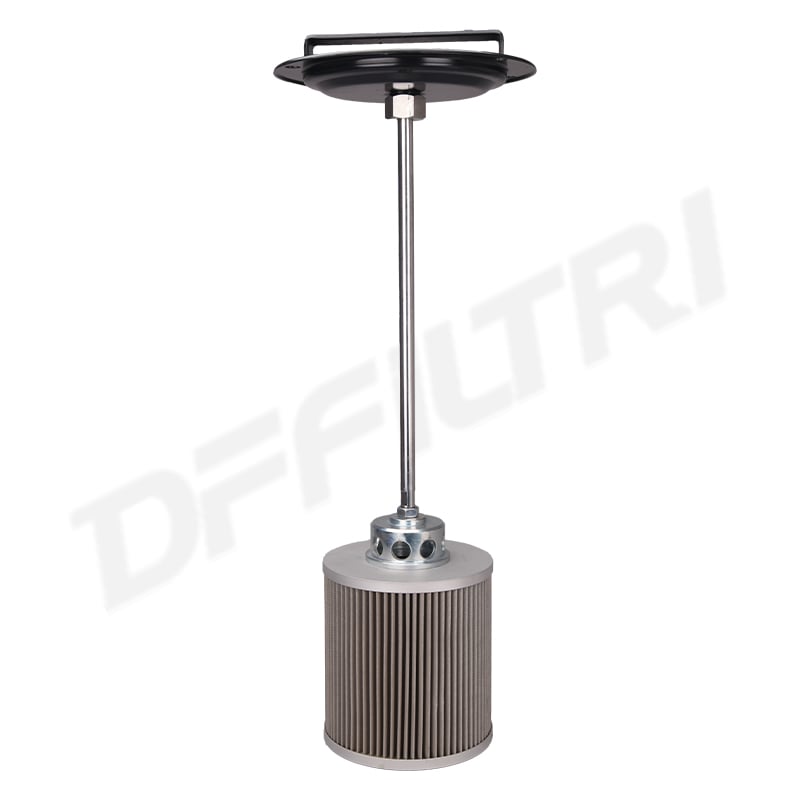
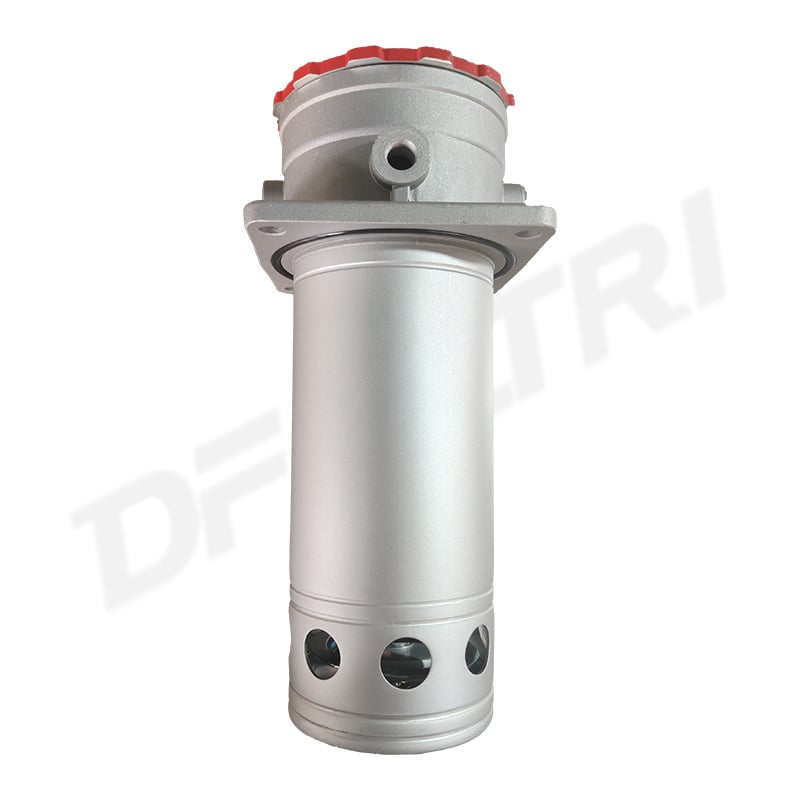
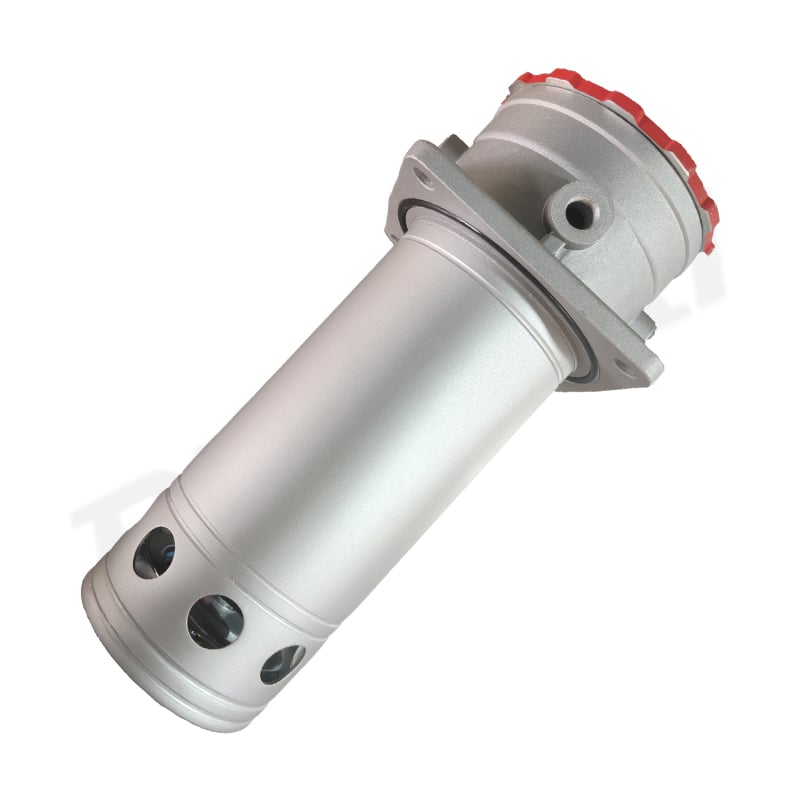
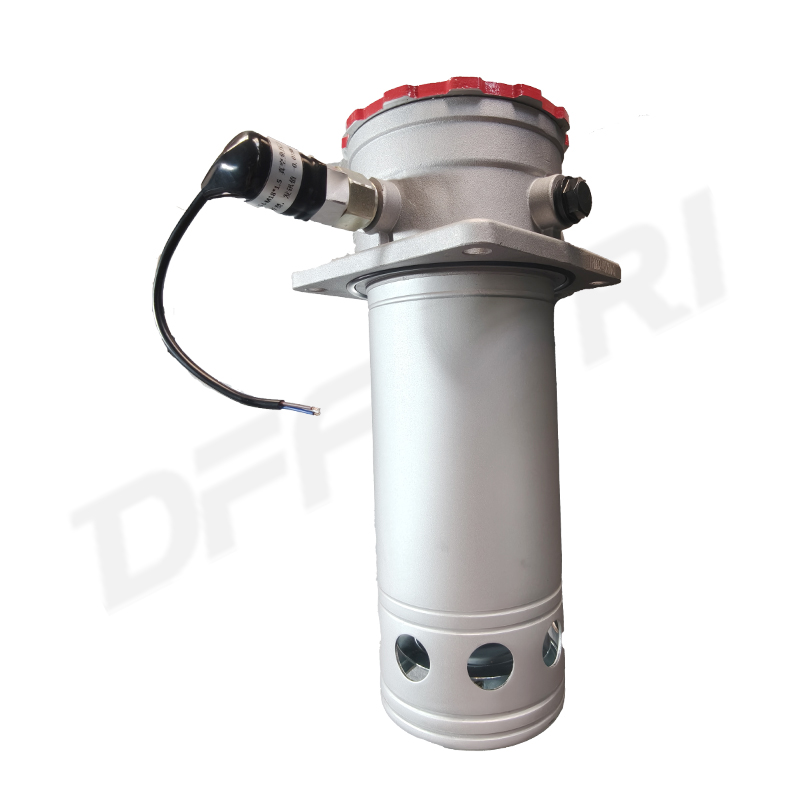
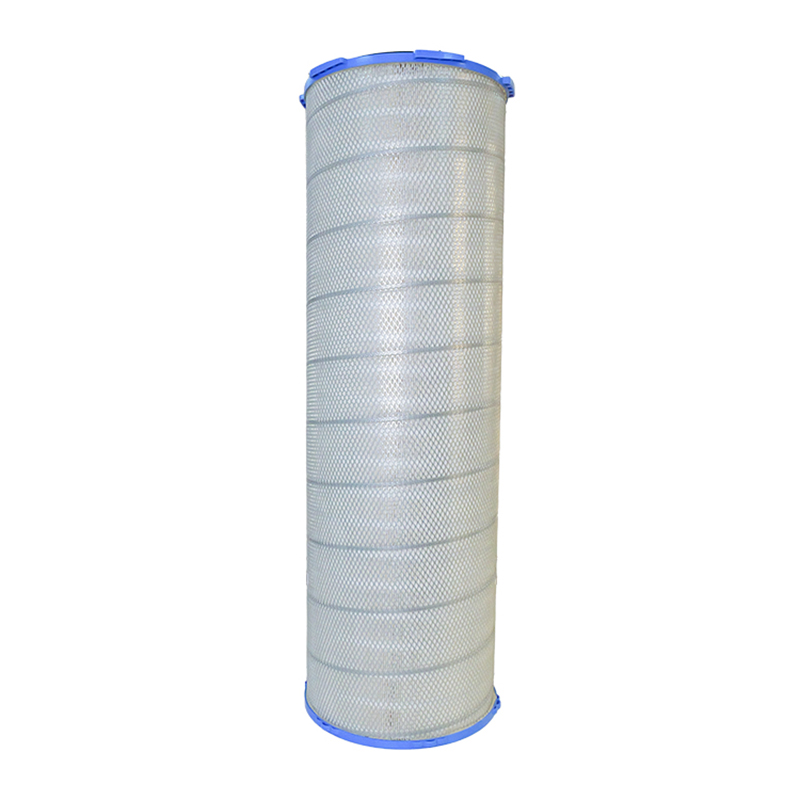
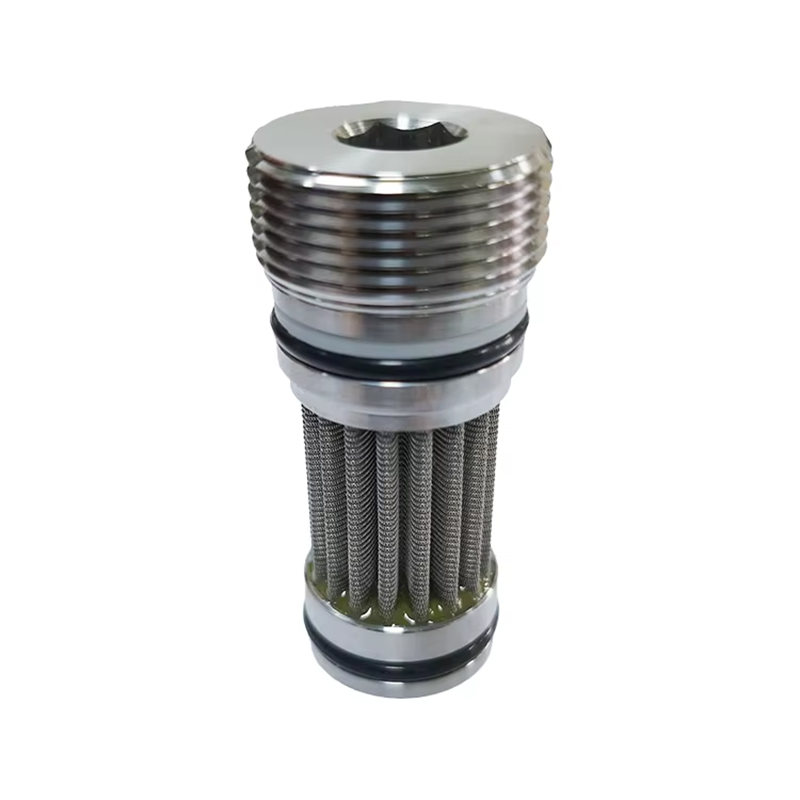
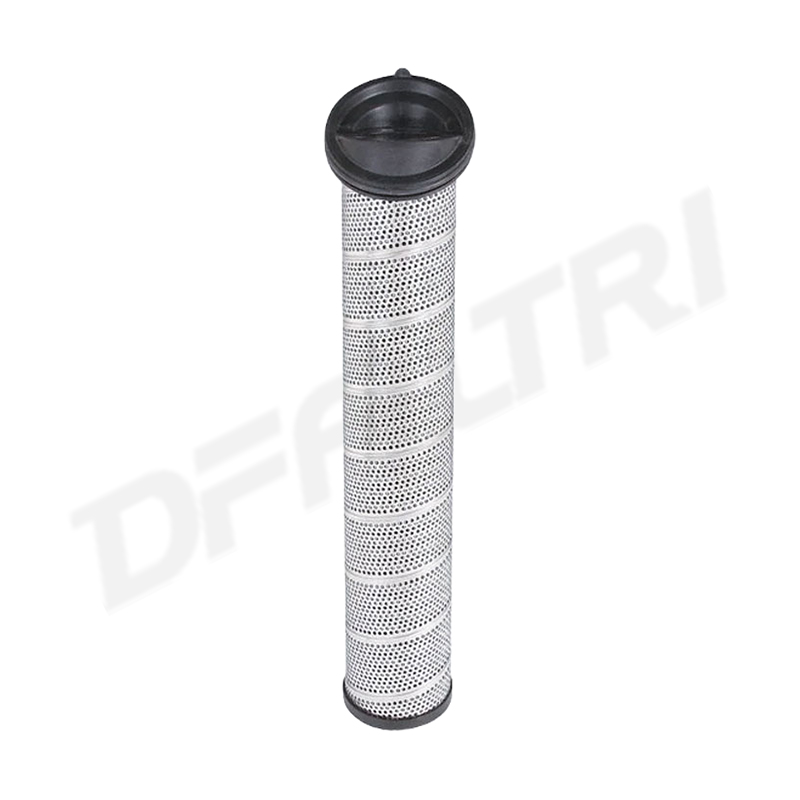
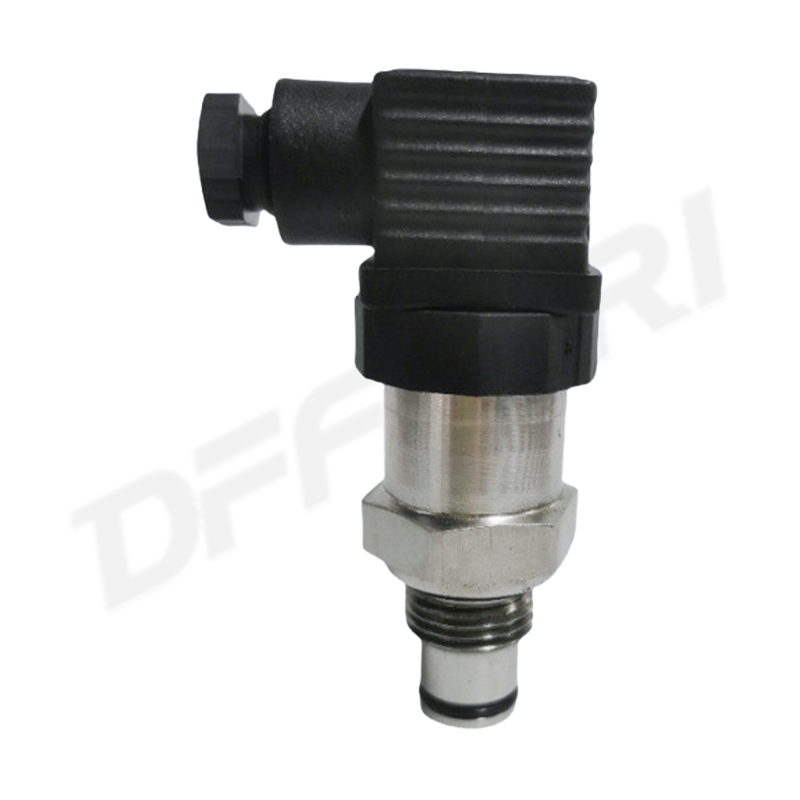
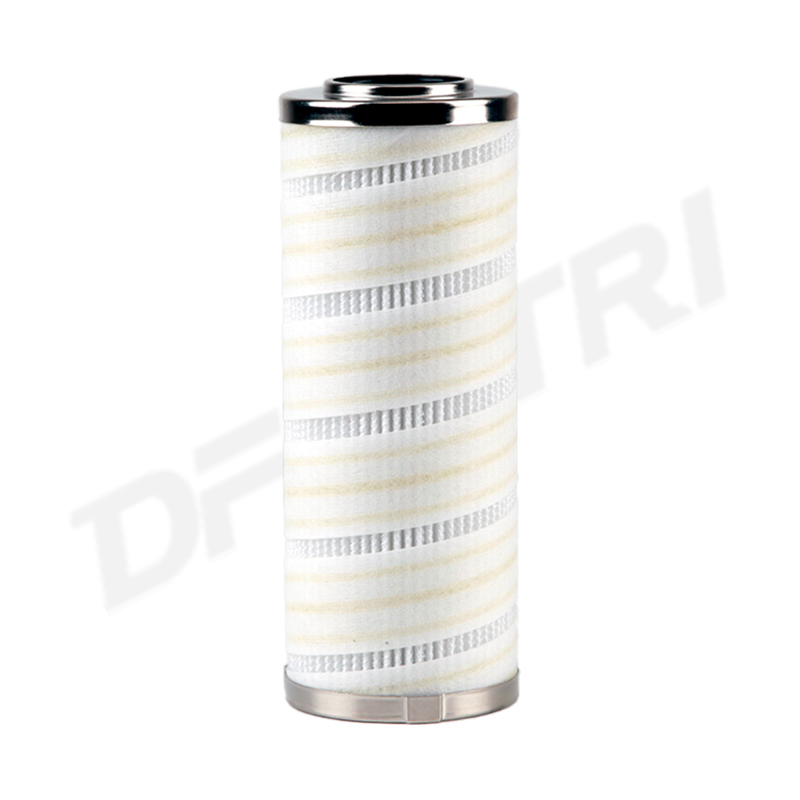
The TFB series oil suction filter adopts a direct insertion structure with a fully immersed oil tank, which is directly connected to the hydraulic pump oil suction port as the first protective barrier of the system. The large flow area composite filter screen efficiently intercepts large-sized solid impurities while avoiding pump body suction. Equipped with a self sealing valve group for core replacement, there is no need to drain the oil tank. It also has a built-in 0.02MPa low-pressure bypass valve to prevent pump body cavitation, and a visual pollution indicator device that can determine blockage status without the need for external tools. It is suitable for use in various conventional hydraulic system suction ends.
The TFB series oil suction filter is a pre protection device designed specifically for the oil suction port of hydraulic pumps. It adopts a direct insertion installation structure that is fully immersed in the oil tank. The entire cylinder is completely placed below the oil level of the oil tank, with only the top connecting end cover exposed to the oil tank cover plate, directly connected to the inlet of the hydraulic pump oil suction pipeline. It completes the first stage purification interception before the oil enters the hydraulic pump, avoiding large-sized impurities in the oil tank from being sucked into the pump body from the source. It is the most basic and critical first pollution protection barrier of the hydraulic system, and is suitable for the standardized installation requirements of the oil suction end of most conventional hydraulic stations.
| Brand Name | DFFILTRI |
| Filter model | TFB |
| Nominal flow rate(L/min) | 45,70 |
| Filtration rating(μm) | 3,5,10,20,30... |
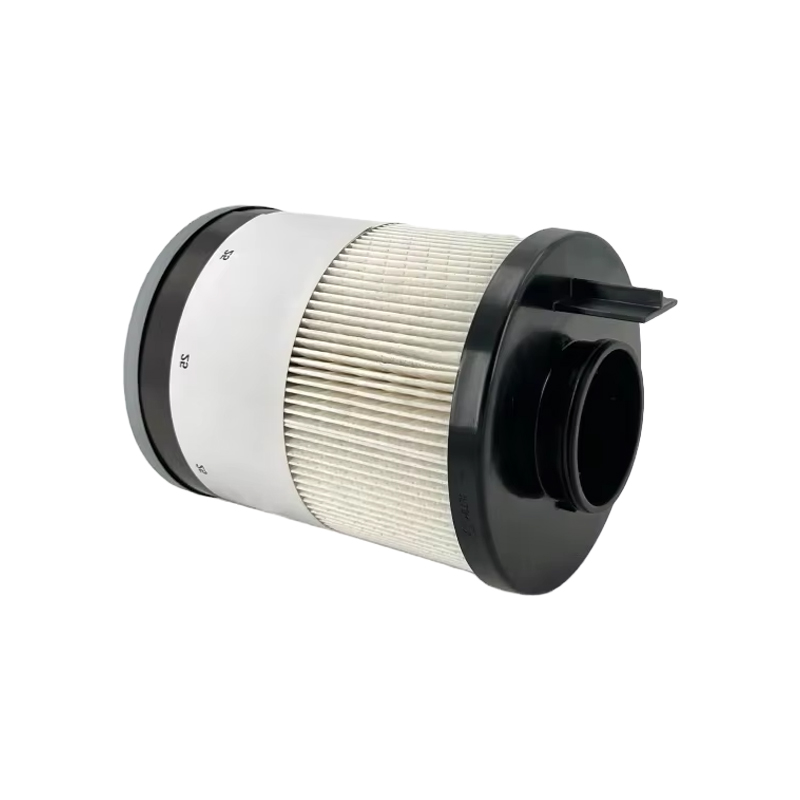
The TFB series oil suction filter adopts a multi-layer composite filter structure with a large flow area. The outer layer is a high-strength coarse protective net, the middle layer is a metal woven support skeleton, and the inner layer is a precision filtration layer with specified accuracy. While ensuring the oil flow capacity and avoiding the phenomenon of hydraulic pump suction, it efficiently intercepts large solid impurities in the oil tank; A dedicated self sealing valve group is installed at the top. When the filter cover is unscrewed for filter element replacement, the self sealing valve at the suction port will automatically close, blocking the oil in the tank from flowing out. Maintenance operations can be completed without the need to drain the oil in the tank in advance; Equipped with a built-in bypass valve, the opening pressure is set to 0.02 MPa. When the filter element is completely blocked by impurities and a negative pressure difference is formed on the suction side, the bypass valve automatically opens to avoid damage problems such as suction and cavitation caused by excessive suction resistance of the hydraulic pump; A dedicated pollution indicator device is installed at the top, which can intuitively provide feedback on the clogging status of the filter element, and can determine whether the filter element needs to be replaced without the need for external detection tools.
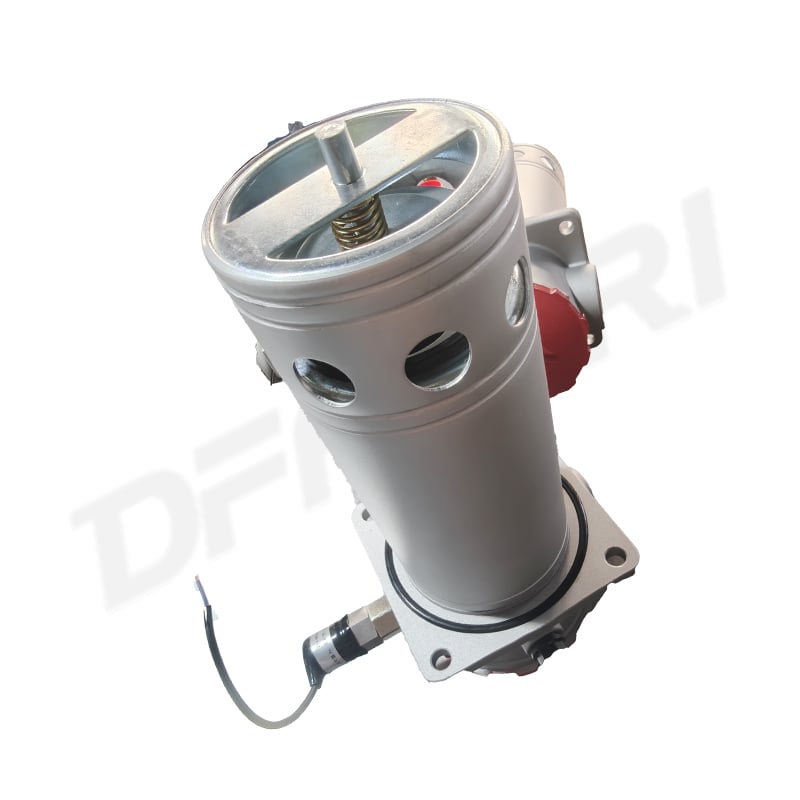
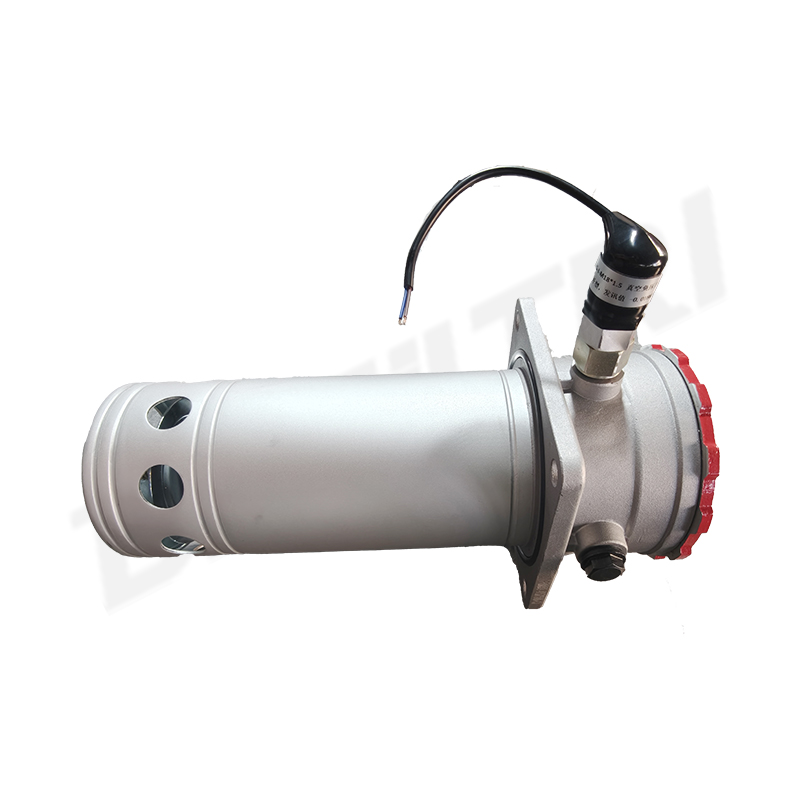
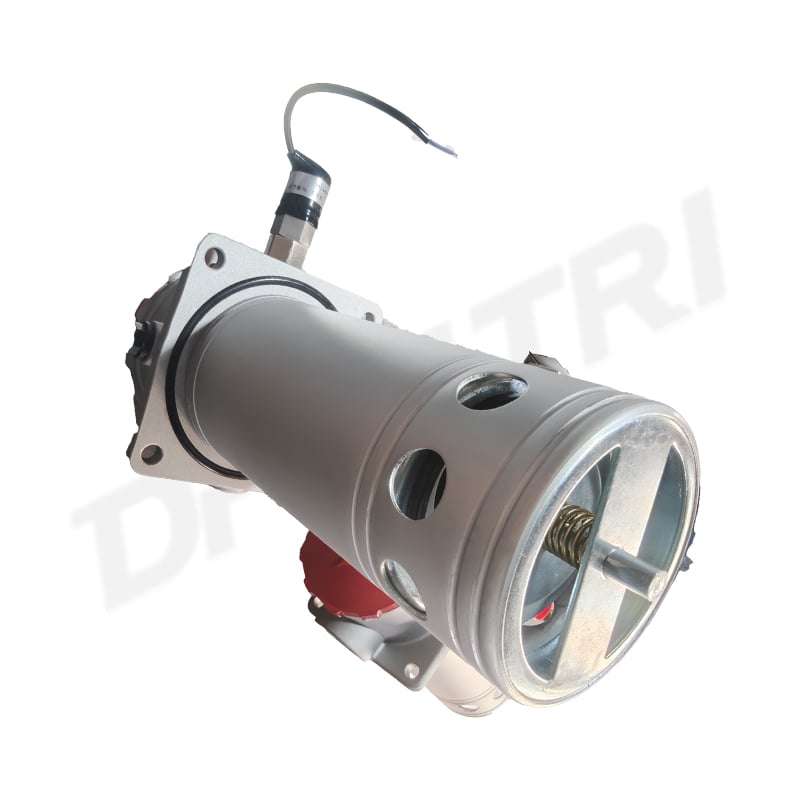
The TFB series oil suction filter is widely suitable for pre purification scenarios at the oil suction end of various industrial hydraulic systems. It can be used in general machine tool hydraulic stations, engineering machinery power hydraulic systems, mining equipment lubrication hydraulic circuits, metallurgical auxiliary hydraulic units, rubber molding oil circuits, agricultural machinery hydraulic power stations, and other working conditions. It is particularly suitable for operating environments with high oil impurity content in the oil tank and strict requirements for the stability of hydraulic pump operation. It can effectively prevent large-sized hard particles from entering the interior of the hydraulic pump, greatly reducing the probability of abnormal wear of core moving parts such as pump gears, blades, and plungers.

Compared to conventional simple oil suction filters, the TFB series oil suction filter features a large capacity composite filter screen design, which increases the pollutant holding capacity by more than 40% compared to ordinary filters of the same precision. This effectively extends the filter element replacement cycle and reduces long-term operation and maintenance frequency; The self sealing structure completely solves the problem of a large amount of oil overflowing from the fuel tank during core replacement. A single person can quickly complete maintenance operations without the need for additional oil containers; The extremely low initial pressure difference design does not cause additional resistance to the hydraulic pump suction at rated flow, avoiding common faults such as suction and cavitation from the root; The overall design adopts standard flanges or threaded interfaces, which can directly replace conventional oil suction filters of the same specifications without the need to modify the original fuel tank cover plate and oil suction pipeline, making it highly adaptable.
When the hydraulic pump is running, there is a noticeable suction noise. First, check whether the filter element is completely blocked. If there are a large number of impurities attached to the surface of the filter element, clean or replace it with a new filter element in a timely manner to eliminate the noise; After replacing the filter element, if there is oil leakage, check whether there are metal debris attached to the sealing surface of the self sealing valve, clean the impurities, and then close the valve group again and evenly tighten the upper cover fasteners to restore the sealing performance; The pollution indicator device did not trigger the alarm as expected. Check if there is any air accumulation inside the indicator device. Gently tap the outer shell to release the internal air and restore normal feedback; The system flow rate is significantly lower than the rated value. First, check whether there is local blockage in the oil suction filter screen. After cleaning the impurities deposited on the surface of the filter screen, the oil flow capacity can be restored to the design standard.
 EN
EN