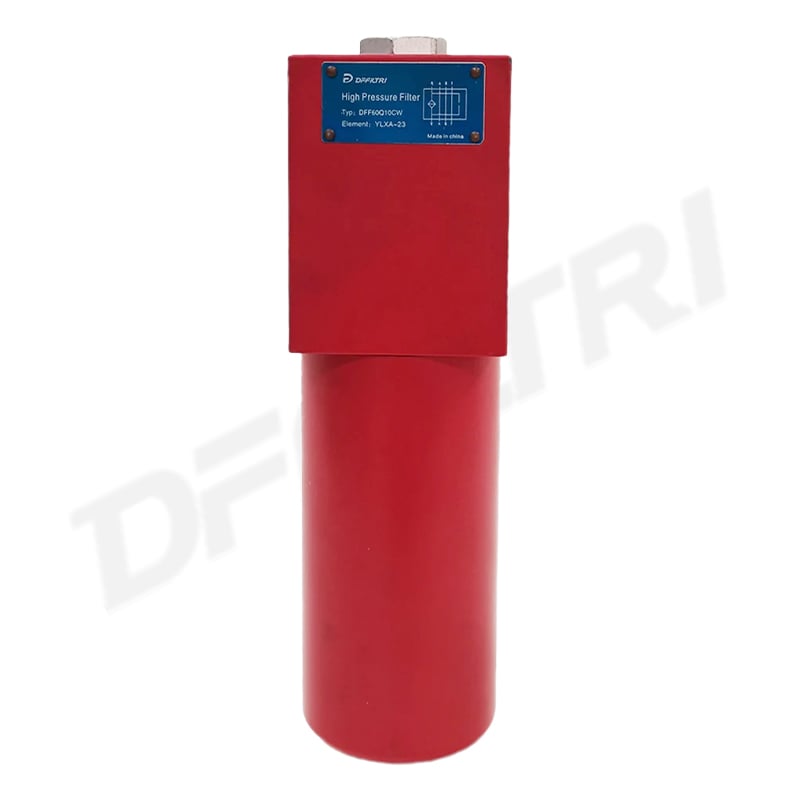
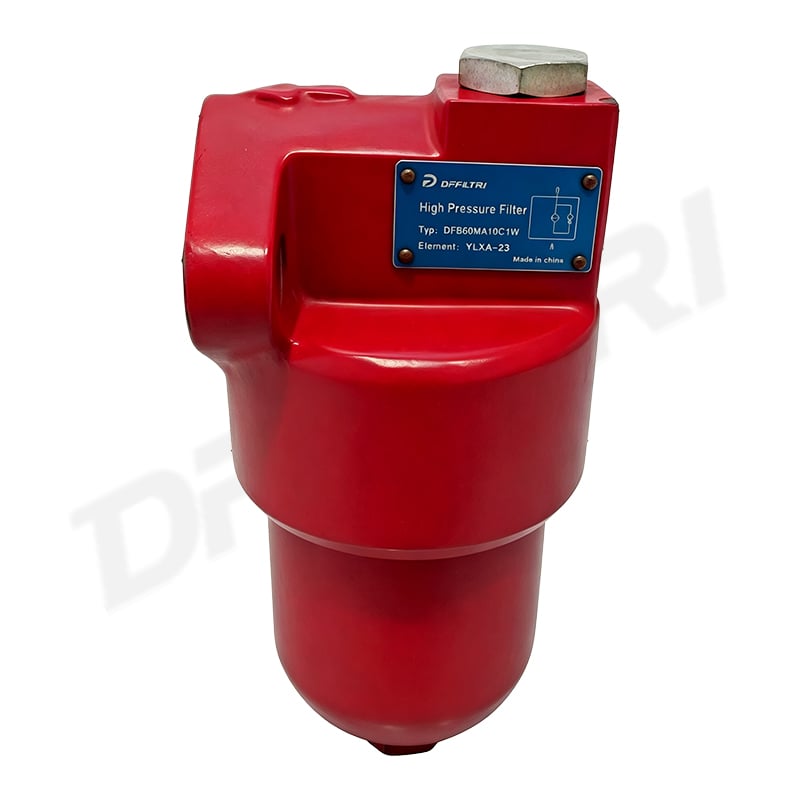
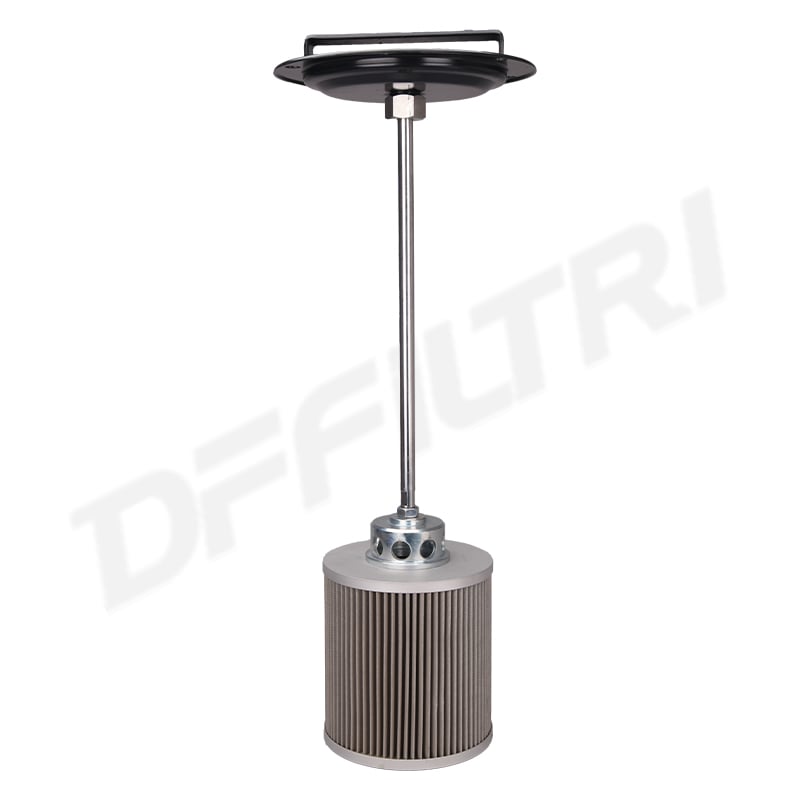
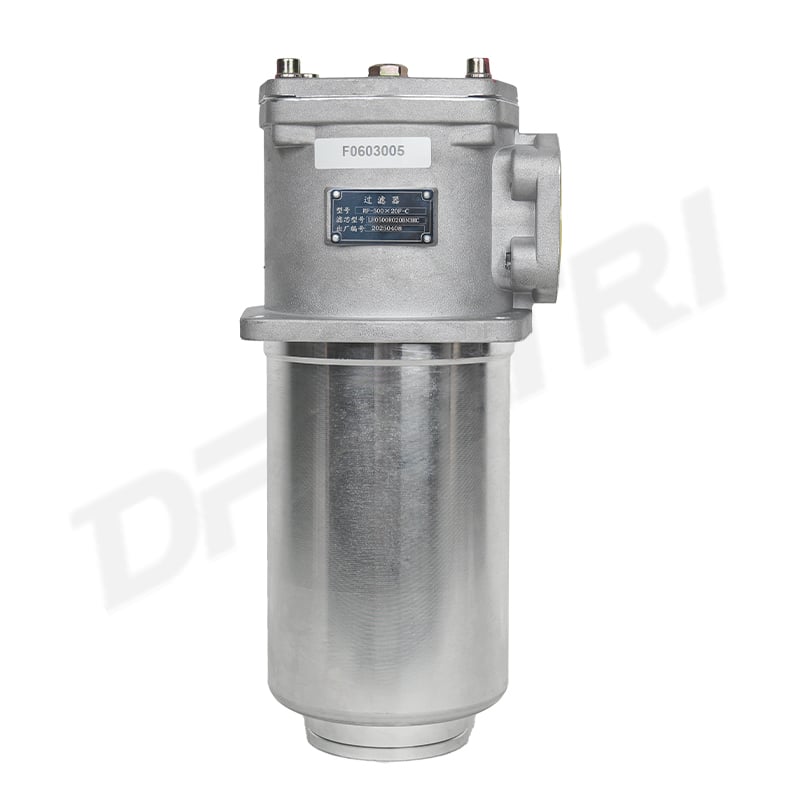
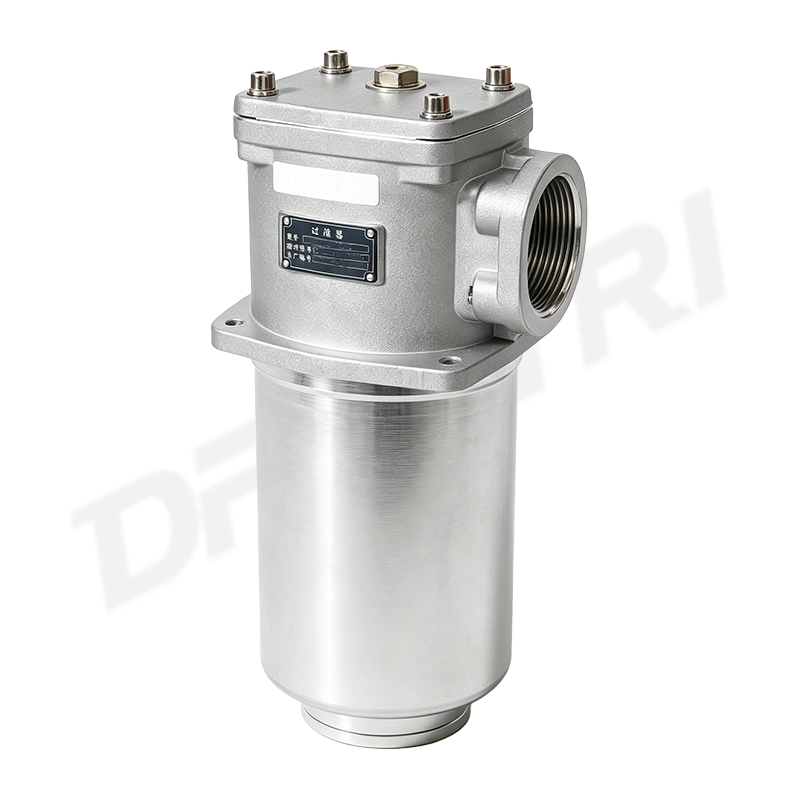
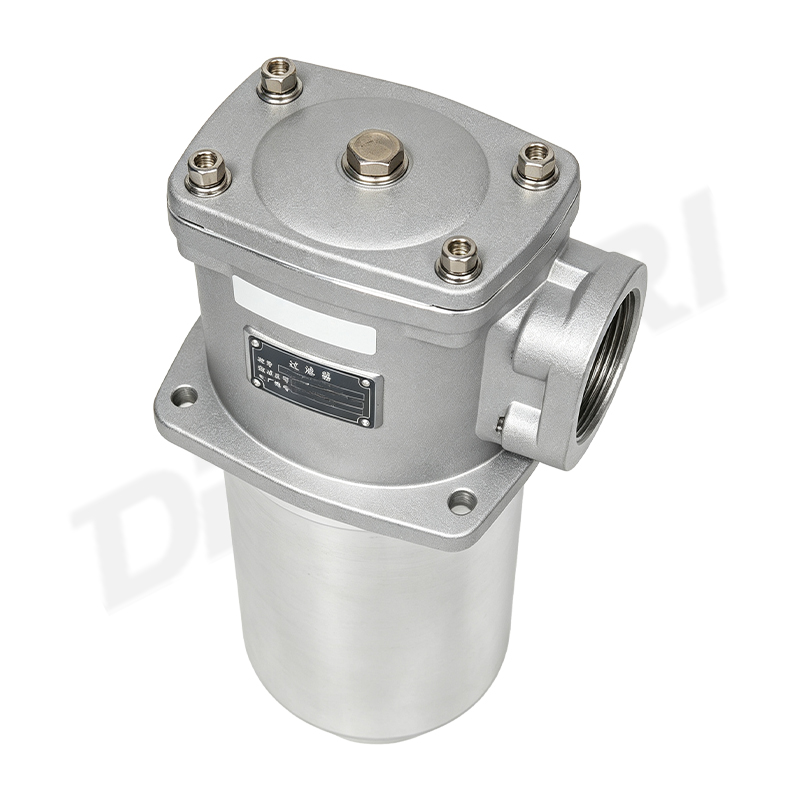
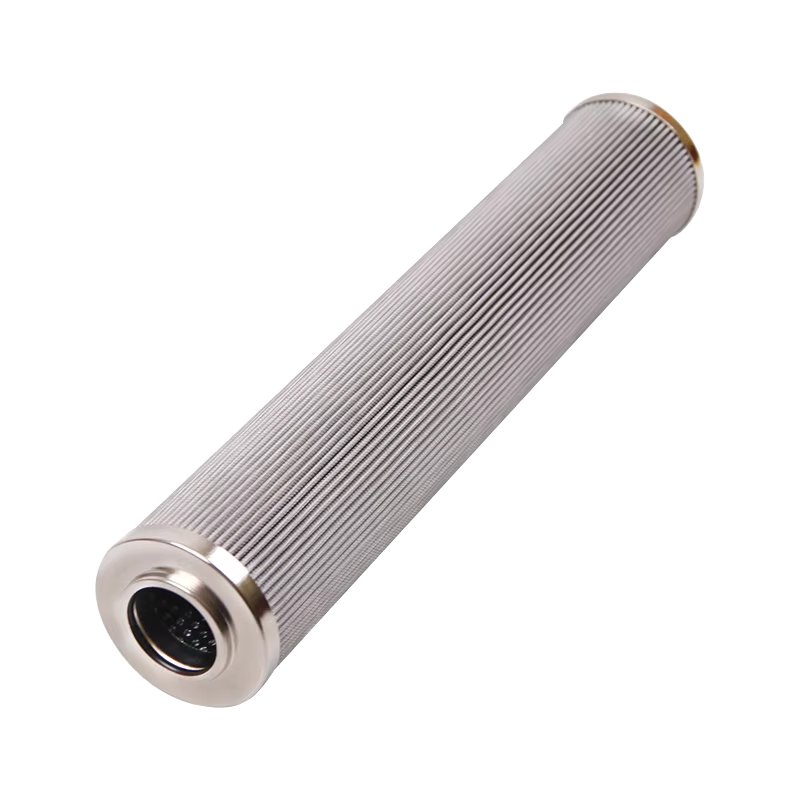
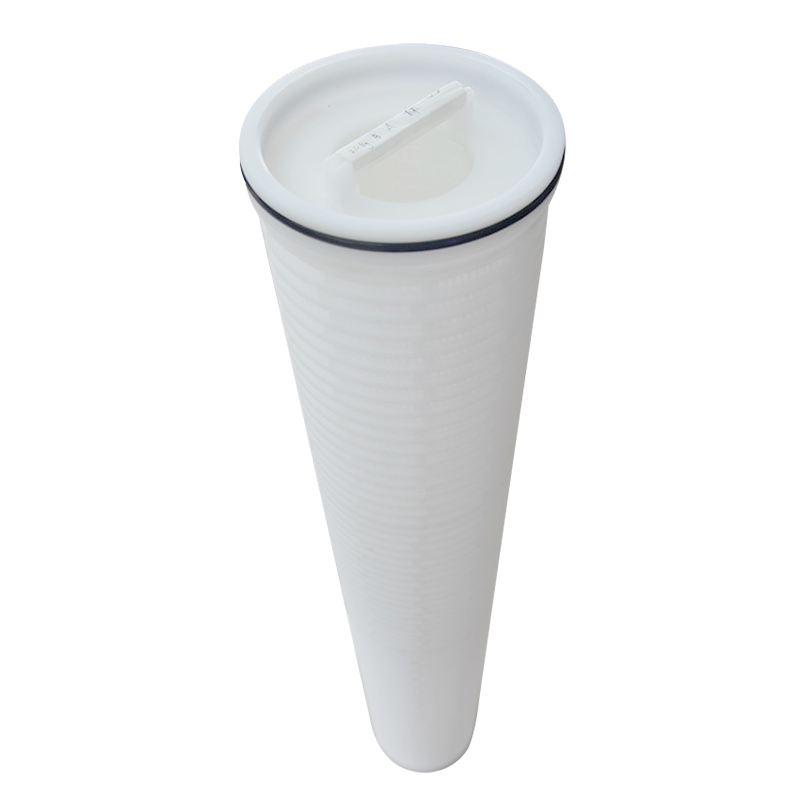
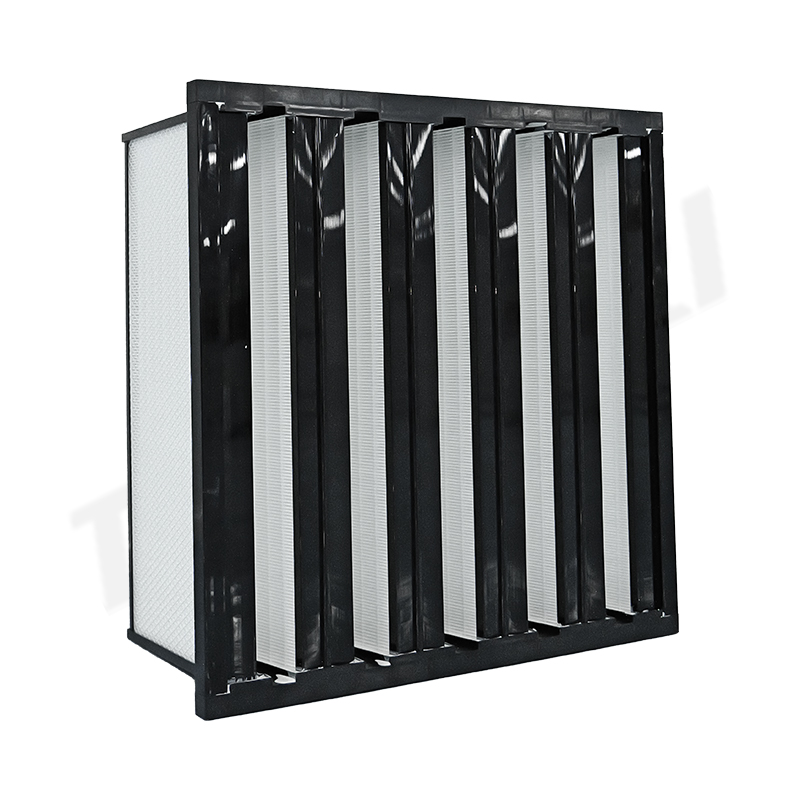
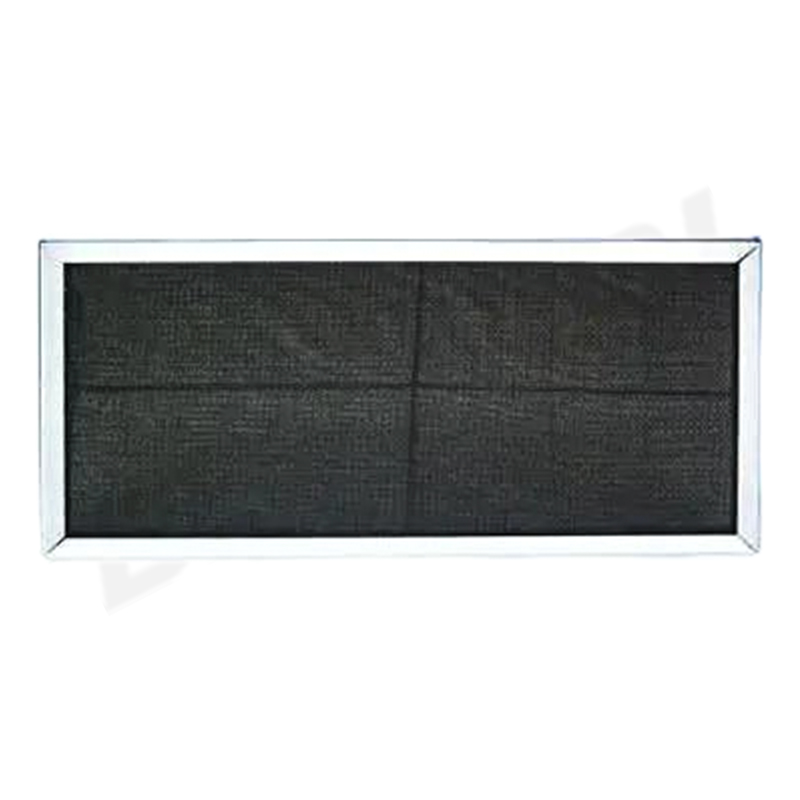
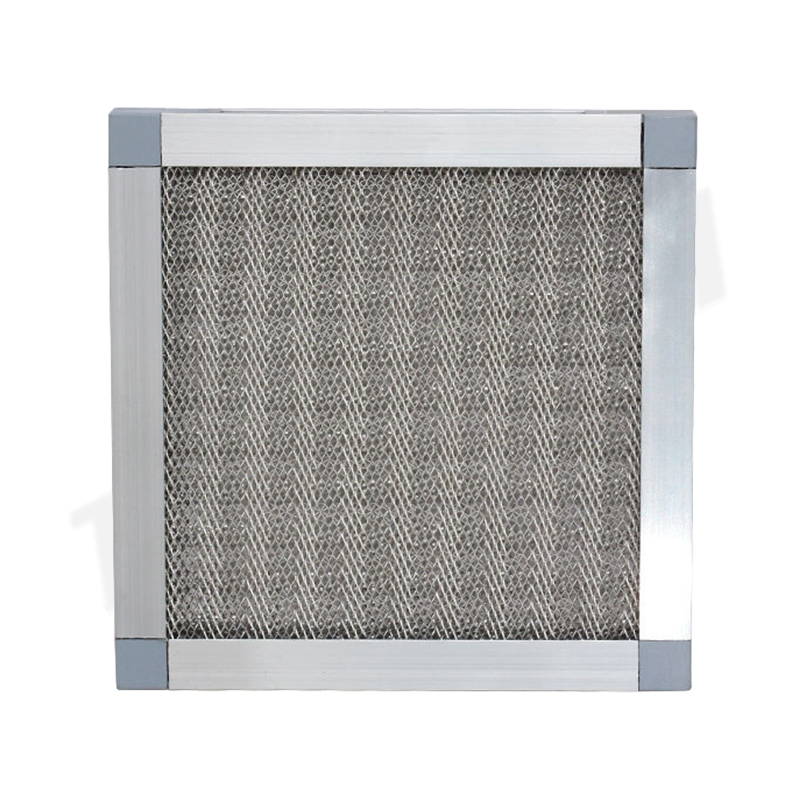
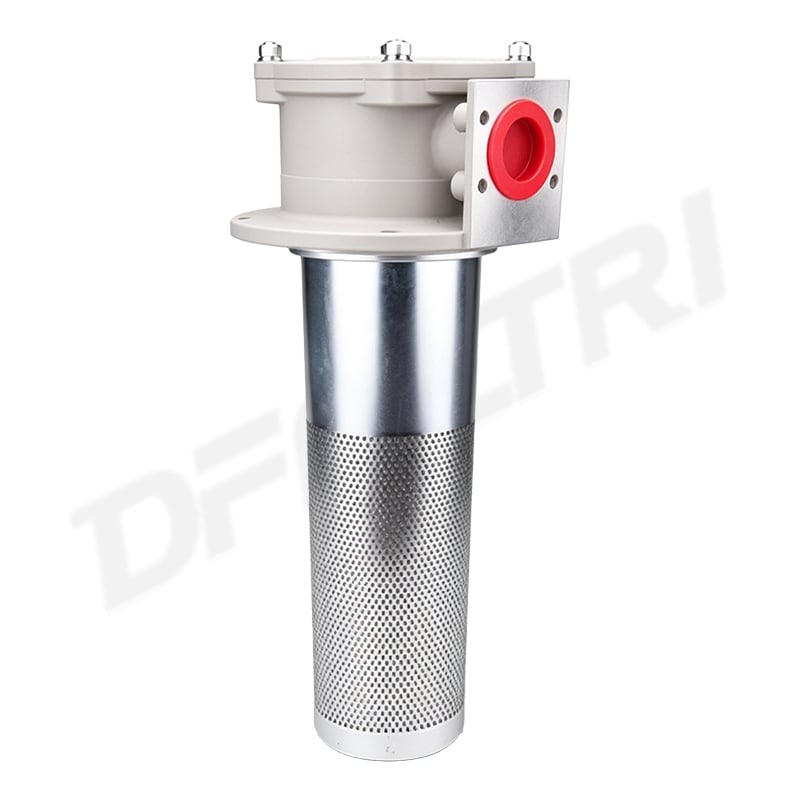
The RF series oil return filter adopts a direct entry layout with a fully immersed cylinder oil tank. The annular strong magnet is combined with a high-precision folding filter element to form a gradient purification, efficiently intercepting ferromagnetic particles and various solid impurities in the oil. Built in 0.3MPa bypass valve to prevent high pressure breakdown of the filter element, matched with a threshold pressure differential transmitter to provide real-time warning of blockage status, integrated check structure to avoid reverse flow of contaminated oil during shutdown, and standard universal interface suitable for installation and use on the return end of most conventional hydraulic systems.
The RF series return oil filter is a universal direct inlet purification device designed specifically for the return oil end of hydraulic systems. It adopts a full cylinder immersed installation structure in the oil tank, with only the top filter head exposed outside the tank. The oil is directly connected to the filter head inlet from the system return oil pipeline, and after being fully purified by the filter element, it is directly discharged into the oil tank without the need for additional external return oil pipelines. This greatly simplifies the oil circuit layout of hydraulic stations, reduces the number of pipeline bends and connection points, and reduces the risk of system leakage from a structural perspective, adapting to the standardized return oil filtration requirements of most conventional industrial hydraulic systems.
| Brand Name | DFFILTRI |
| Nominal flow rate (L/min) | 60,,110,160,240... |
| filtration rating | 3,5,10,20,30... |
| Type of connection | Threaded type, flange type |
The RF series oil return filter is equipped with a ring-shaped strong magnetic component, which can adsorb ferromagnetic metal debris flowing through the oil in all directions. It is matched with folding glass fiber or stainless steel woven mesh filters of different precision levels to form a gradient filtration structure, which efficiently intercepts solid impurities of different particle sizes while ensuring oil flow capacity; A bypass valve with a built-in opening pressure of 0.3 MPa will automatically open when the filter element is clogged, causing the pressure difference between the front and rear to exceed the limit, or when the oil viscosity is too high during low-temperature cold start, to prevent the filter element from being punctured by high pressure and causing secondary oil pollution; Equipped with a pressure differential transmitter with a trigger threshold of 0.3MPa, it can issue a warning in a timely manner when the filter element reaches its rated pollutant carrying capacity, reminding operation and maintenance personnel to replace the filter element at the appropriate time; The internal integrated check structure of the filter head can prevent the contaminated oil in the oil tank from flowing back to the upstream pipeline in reverse during system shutdown, protecting upstream precision hydraulic components from reverse contamination.
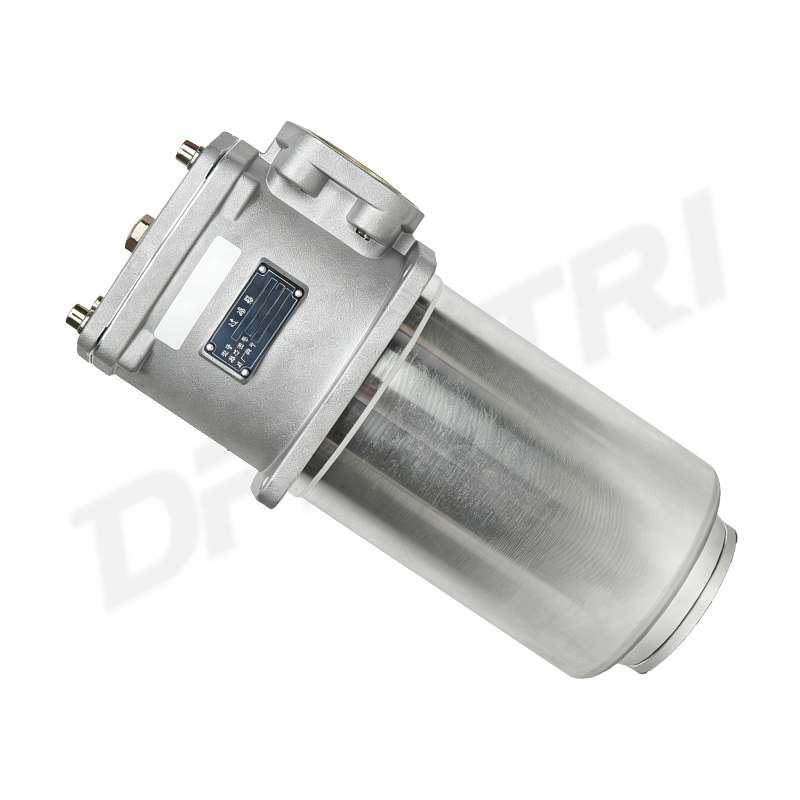
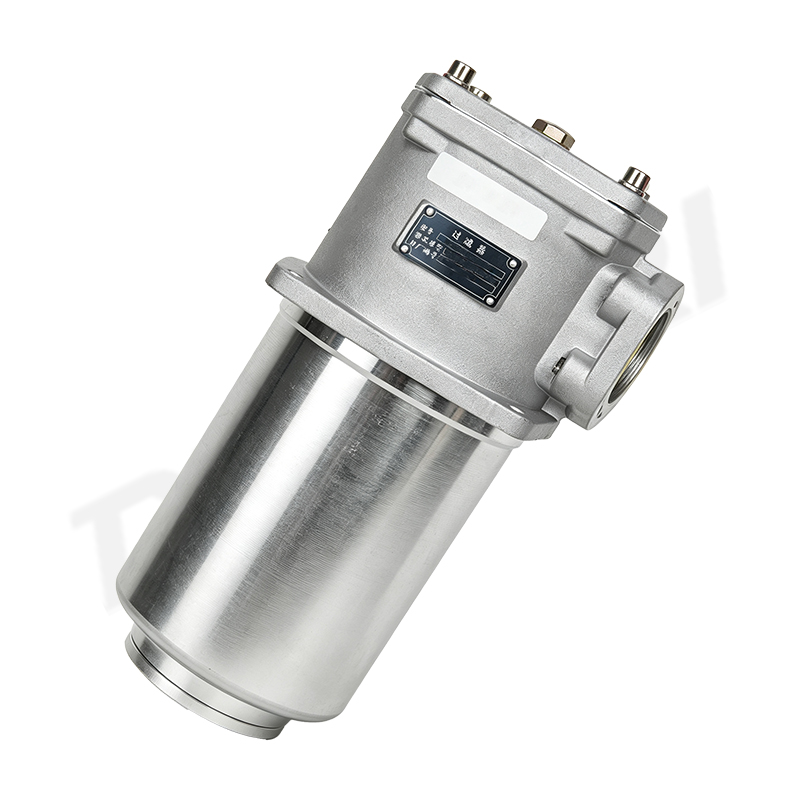
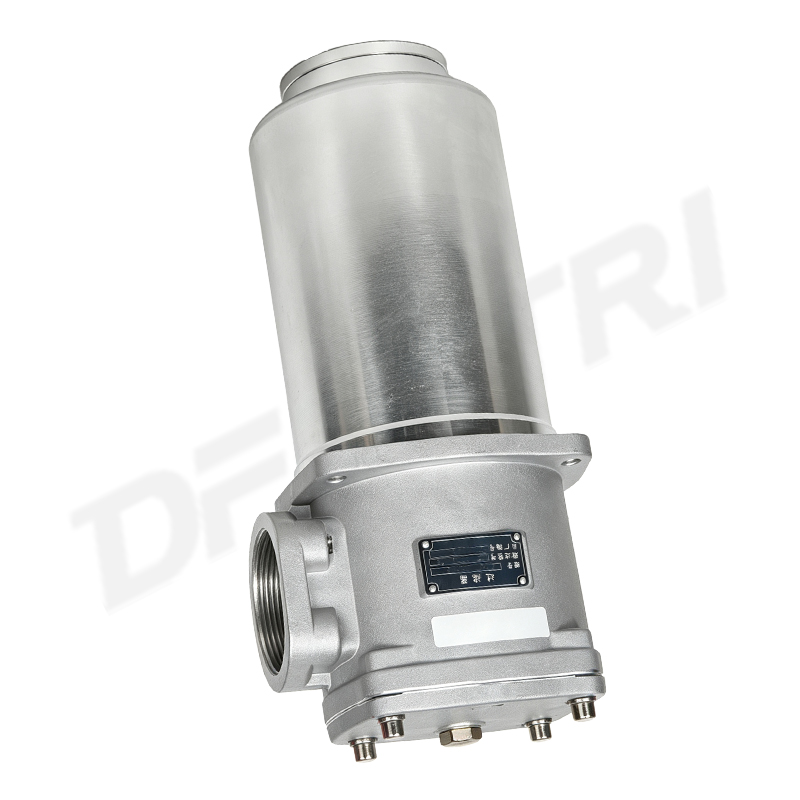
The RF series oil return filter is widely suitable for the oil purification process of various general industrial hydraulic systems. It can be used in conventional working conditions such as ordinary machine tool hydraulic stations, light industry automation equipment hydraulic circuits, small engineering machinery hydraulic systems, rubber and plastic equipment hydraulic power units, general lubrication systems, and conveying equipment hydraulic control circuits. It is particularly suitable for continuous operation scenarios that require high filtration stability and moderate maintenance frequency. It can effectively reduce the wear rate of core components such as hydraulic pumps, hydraulic valves, and execution cylinders, extend the service life of hydraulic oil, and reduce the probability of system failure and shutdown.


Compared to conventional oil return filters of the same type, the RF series oil return filter adopts a large capacity folding filter element design, which increases the pollutant holding capacity by more than 30% compared to ordinary filters of the same precision, effectively extending the filter element replacement cycle and reducing long-term operation and maintenance costs; The fully straight flow oil passage structure significantly reduces the pressure loss of the filter itself and minimizes unnecessary energy consumption in the system; The overall design adopts a standard universal interface, which can directly replace mainstream return oil filter products of the same specifications on the market, without the need to modify the original pipeline, and has strong adaptability; The overall structure has no unnecessary complex components, and disassembly and maintenance do not require special tools. Ordinary operation and maintenance personnel can quickly replace the filter element by themselves, greatly reducing the downtime for maintenance.
The differential pressure transmitter frequently triggers an alarm. First, check whether there is a short-term flow overload situation in the system. If the flow parameters are normal, it means that the filter element has reached the blockage limit. Replace the filter element with a new one of the same precision specifications to restore normal operation; During low-temperature cold start, the oil return resistance is significantly higher, which is a normal phenomenon of increased oil viscosity in low-temperature environments. After the system runs for a period of time and the oil temperature rises, the resistance will naturally fall back to the normal range; After replacing the filter element, if there is oil leakage, check whether the sealing ring at the connection position between the filter head and the cylinder is installed properly, whether impurities are attached to the sealing surface, clean the impurities, and tighten the connecting fasteners evenly again to solve the problem; After the system was shut down and restarted, there was a brief pressure instability, most likely due to a stuck check structure causing a small amount of oil to flow back. Disassembling and cleaning the impurities attached to the surface of the check valve can restore normal function.
 EN
EN